
0.05 TH/s Minimum
We only cover units that sustain at least 0.05 terahashes per second under farm voltage, documenting thermal drift and cable strain at that load.
Workspace Ashpath Mining Review tests ASIC miners and immersion units in working conditions, then documents rack arrangements that keep power feeds, network runs, and cooling lines from becoming a maintenance hazard.

Every review session starts at a live farm or workshop bay, not a spec sheet.
We only cover units that sustain at least 0.05 terahashes per second under farm voltage, documenting thermal drift and cable strain at that load.

Layouts are scored on bend radius, PDU spacing, and how quickly a technician can trace a failed line without shutting down adjacent rows.

Tidy cabling means nothing if it blocks intake lanes. We note where cable trays compete with hot-aisle containment.
On-site cable-managed rack assessment for farms running 0.05 TH/s-class hardware.
A two-day visit to your Cheongju-area facility or a site within 200 km. We photograph existing runs, load-test representative miners, and deliver a marked-up layout drawing with PDU repositioning notes and spare-cable lengths.
Full Service DetailsAshpath traced our 240 V runs in under an hour because they had already mapped the vertical trays during the assessment. The only gripe: they wanted us to relabel two rows we thought were fine — turned out they were right about the heat pocket behind PDU four.
We brought them in after a breaker trip took half a row offline. Their layout revision cut our mean time to isolate a bad cable from forty minutes to about twelve. Pricing was straightforward for the travel from Cheongju.
Guides drawn from actual assessment visits.
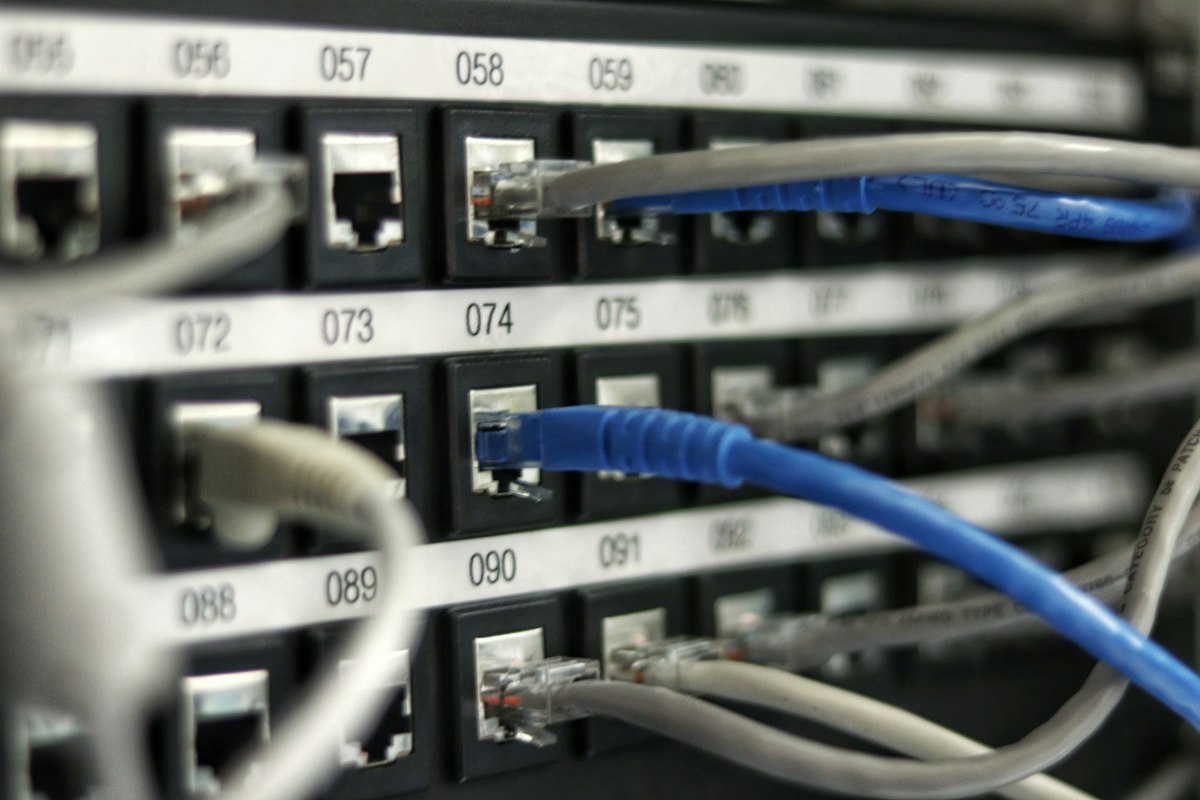
When a farm runs miners at or above 0.05 TH/s per unit, the power leads stay warm around the clock. Horizontal tray runs along the top of a rack look tidy in photos, but they create two problems we see repeatedly in Cheongju-area assessments.
Horizontal trays mounted at rack top sit in the exhaust path. Insulation on 10 AWG farm cables softens over months when exposed to 45°C+ exhaust. We have measured jacket deformation on leads that spent eight months in top-mounted horizontal trays versus identical leads in side-mounted vertical trays on the same row.
During a recent assessment in Sejong, a farm had mounted PDUs every 42 cm to match their previous generation of lower-power units. The new 0.08 TH/s ASICs drew enough current that adjacent outlets shared heat through the PDU housing.
We logged surface temperature on three PDU models at 30 cm, 40 cm, and 50 cm spacing with identical load per outlet. At 30 cm spacing, the middle PDU ran 11°C hotter than ambient after four hours. At 50 cm, the difference dropped to 4°C.
The most common labelling failure we see is not missing labels — it is inconsistent labels. Row A uses coloured tape, Row B uses printed tags, and Row C has handwritten masking tape that faded in the hot aisle.
Every assessment report includes a labelling specification clients can hand to their electrician:
R{row}-P{position}-{type} where type is PWR or NETR03-P12-PWR is power feed to position 12 in row 3A technician tracing a trip starts at the PDU and walks the tray. If the label only exists at the miner end, they open the hot aisle and crawl. Dual labels cut average trace time dramatically.